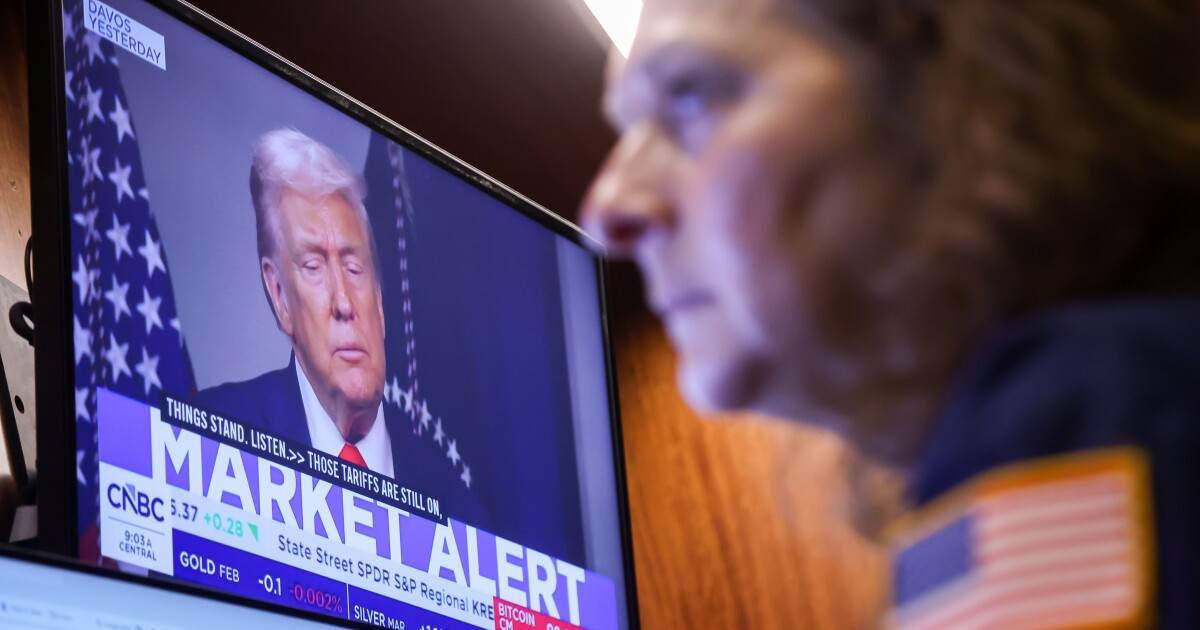
President Donald Trump seems to have upended an 85-year relationship between American farmers and america’ world train of energy. However that hyperlink has been fraying because the finish of the Chilly Struggle, and Trump’s strikes are simply one other huge step.
Throughout World Struggle II, the U.S. authorities tied agriculture to international coverage through the use of taxpayer {dollars} to purchase meals from American farmers and ship it to hungry allies overseas. This agricultural diplomacy continued into the Chilly Struggle via packages such because the Marshall Plan to rebuild European agriculture, Meals for Peace to ship surplus U.S. meals to hungry allies, and the U.S. Company for Worldwide Improvement, which aimed to make meals help and agricultural improvement everlasting parts of U.S. international coverage.
Throughout that interval, america additionally participated in multinational partnerships to set world manufacturing objectives and commerce pointers to advertise the worldwide motion of meals – together with the U.N.’s Meals and Agriculture Group, the Worldwide Wheat Settlement and the Common Settlement on Tariffs and Commerce.
When U.S. farmers confronted labor shortfalls, the federal authorities created guest-worker packages that offered vital fingers within the fields, most frequently from Mexico and the Caribbean.
On the finish of World Struggle II, the U.S. authorities acknowledged that farmers couldn’t simply depend on home agricultural subsidies, together with manufacturing limits, worth helps and crop insurance coverage, for prosperity. American farmers’ well-being as an alternative relied on the remainder of the world.
Since returning to workplace in January 2025, Trump has dismantled the U.S. Company for Worldwide Improvement. His administration has additionally aggressively detained and deported suspected noncitizens residing and dealing within the U.S., together with farmworkers. And he has imposed tariffs that brought about U.S. buying and selling companions to retaliate, slashing worldwide demand for U.S. agricultural merchandise.
Trump’s actions observe diplomatic and agricultural transformations that I analysis, and which started with the autumn of the Soviet Union in 1991.
Feed the world, save the farm
Even earlier than the nation’s founding, farmers in what would change into america staked their livelihood on worldwide networks of labor, vegetation and animals, and commerce.
Cotton was probably the most outstanding early instance of those relationships, and by the nineteenth century wheat farmers relied on increasing transportation networks to maneuver their items throughout the nation and abroad.
However fears that worldwide commerce might create financial uncertainty restricted American farmers’ curiosity in abroad markets. The Nice Despair within the Nineteen Thirties strengthened skepticism of worldwide markets, which many farmers and policymakers noticed because the principal reason for the financial downturn.
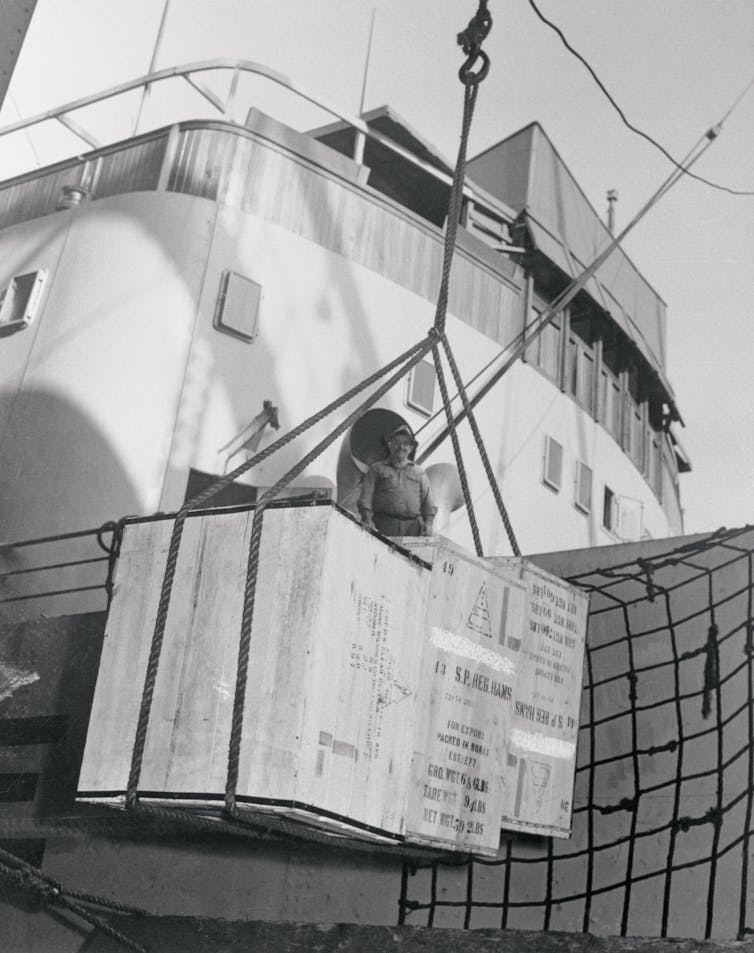
World Struggle II compelled them to alter their view. The Lend-Lease Act, handed in March 1941, aimed to maintain america out of the struggle by offering provides, weapons and gear to Britain and its allies. Importantly for farmers, the act created a surge in demand for meals.
And after Congress declared struggle in December 1941, the necessity to feed U.S. and allied troops overseas pushed demand for farm merchandise ever increased. Meals took on a significance past satisfying a wartime want: The Soviet Union, for instance, made particular requests for butter. U.S. troopers wrote concerning the particular bond created by seeing milk and eggs from a hometown dairy, and Europeans who obtained meals below the Lend-Lease Act embraced massive cans of condensed milk with sky-blue labels as in the event that they have been talismans.

One other struggle ends
However regardless of their vital contribution to the struggle, American farmers anxious that the acquainted sample of postwar recession would repeat as soon as Germany and Japan had surrendered.
Congress fulfilled farmers’ fears of an financial collapse by sharply decreasing its meals purchases as quickly because the struggle ended in the summertime of 1945. In 1946, Congress responded weakly to mounting abroad meals wants.

Extra motion waited till 1948, when Congress acknowledged communism’s rising attraction in Europe amid an underfunded postwar reconstruction effort. The Marshall Plan’s extra sturdy promise of meals and different assets was meant to counter Soviet affect.
Sending American meals abroad via postwar rehabilitation and improvement packages brought about farm income to surge. It proved that international markets might create prosperity for American farmers, whereas meals and agriculture’s significance to postwar reconstruction in Europe and Asia cemented their significance in U.S. international coverage.
Farmers within the trendy world
Farmers’ contribution to the Chilly Struggle shored up their cultural and political significance in a quickly industrializing and urbanizing United States. The Midwestern farm turned an aspirational image utilized by the State Division to encourage European refugees to to migrate to the U.S. after World Struggle II.
American farmers volunteered to be beginner diplomats, sharing strategies and applied sciences with their agricultural counterparts world wide.
By the Nineteen Fifties, delegations of Soviet officers have been touring to the Midwest, together with Soviet premier Nikita Khrushchev’s tour to Iowa in 1959. U.S. farmers reciprocated with excursions of the Soviet Union. Younger Individuals who had grown up on farms moved overseas to stay with host households, working their properties and informally sharing U.S. agricultural strategies. Sure that their land and methods have been superior to these of their abroad friends, U.S. farmers felt obligated to share their knowledge with the remainder of the world.
The collapse of the Soviet Union undermined the central goal for america’ agricultural diplomacy. However a rising world urge for food for meat within the Nineteen Nineties helped make up among the distinction.
U.S. farmers shifted crops from wheat to corn and soybeans to feed rising numbers of livestock world wide. They used newly out there genetically engineered seeds that promised unprecedented yields.
Anticipating these transformations to financially profit American farmers and seeing little have to protect Chilly Struggle-era worldwide cooperation, the U.S. authorities modified its commerce coverage from collaborating on world commerce to creating it extra of a contest.
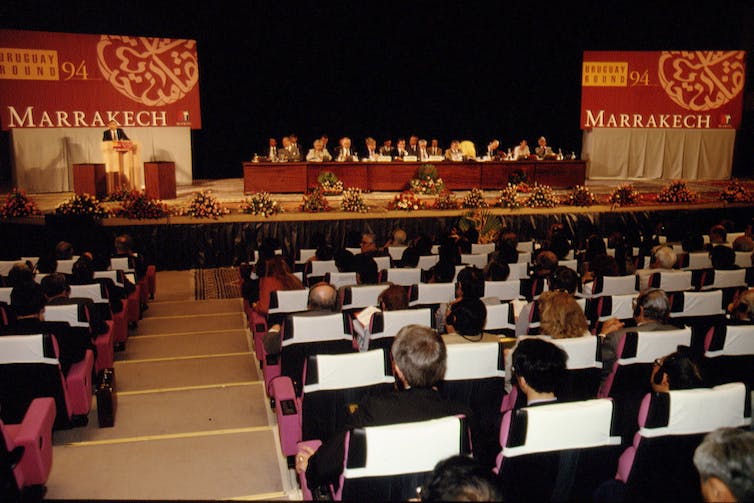

The George H.W. Bush and Clinton administrations crafted the North American Free Commerce Settlement and the World Commerce Group to interchange the overall settlement on commerce and tariffs. They assumed American farmers’ previous preeminence would proceed to extend farm revenues whilst world financial forces shifted.
However U.S. farmers have confronted increased prices for seeds and fertilizer, in addition to new worldwide opponents equivalent to Brazil. With a diminished aggressive benefit and the lack of the Chilly Struggle’s cooperative infrastructure, U.S. farmers now face a extra risky world market that can probably require better authorities help via subsidies relatively than providing prosperity via commerce.
That features the Trump administration’s December 2025 announcement of a US$12 billion farmer bailout. As Trump’s commerce wars proceed, they present that the U.S. authorities is not fostering a world agricultural market wherein U.S. farmers get pleasure from a commerce benefit or authorities safety – even when they maintain some cultural and political significance within the twenty first century.
Peter Simons, Lecturer in Historical past, Hamilton School
This text is republished from The Dialog below a Artistic Commons license. Learn the unique article.